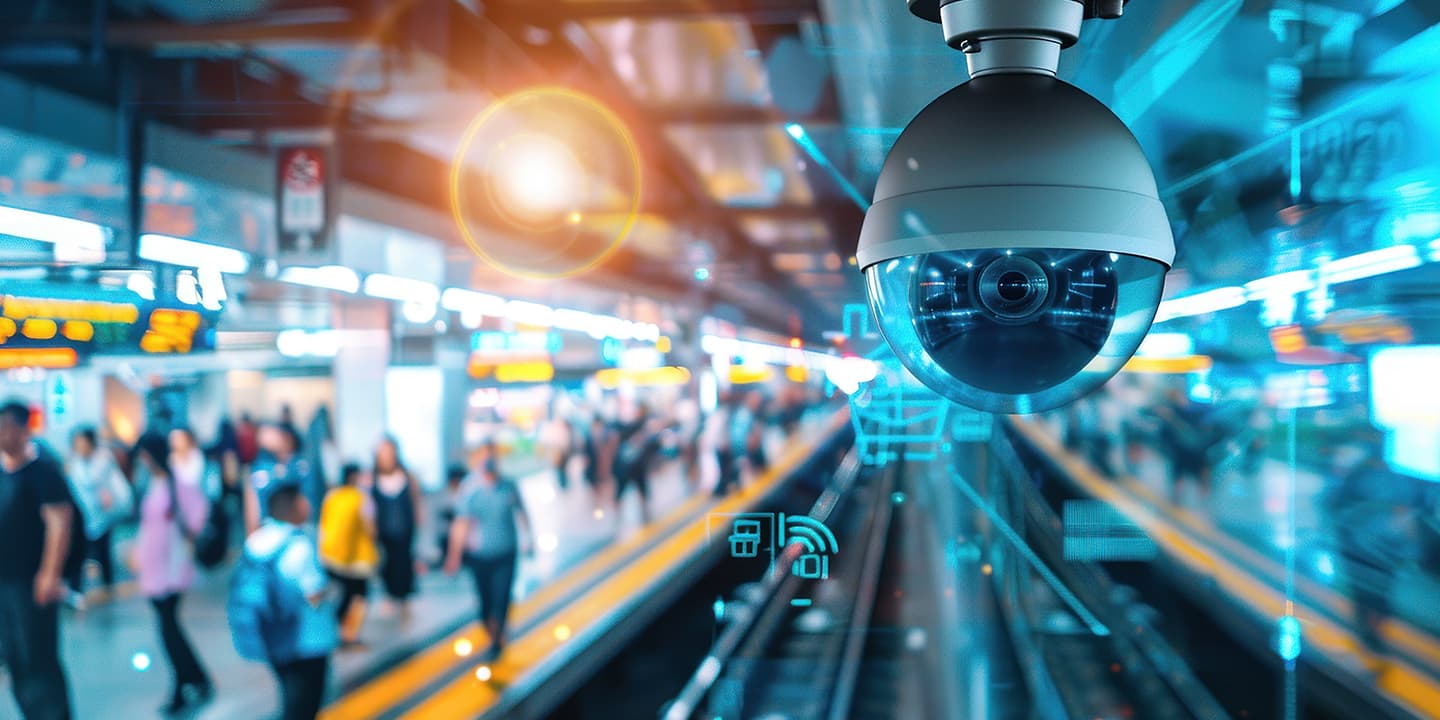
IoT cameras are devices that combine traditional cameras with internet communication capabilities, enabling remote monitoring and operation from distant locations. Their use is expanding across various fields, including security, watching over people, and remote surveillance.
This article provides a detailed explanation of the basic mechanisms and features of IoT cameras, specific use cases, and points to consider when implementing them.
What is an IoT Camera?

An IoT camera is a camera that can connect to the internet. IoT stands for “Internet of Things,” referring to technology that embeds internet communication capabilities into physical objects, enabling remote monitoring and operation.
Beyond cameras, IoT technology is widely integrated into smartphones, smart home appliances, wearable devices, sensors, and more, with its use advancing in every aspect of our lives and industries. Environments designed with the use of IoT devices in mind, such as smart factories and smart cities, are also becoming increasingly common.
Compared to conventional cameras, IoT cameras allow users to view footage remotely via the internet and save video directly to cloud servers.
Primary applications for IoT cameras include surveillance with security cameras, remote monitoring of construction sites and warehouses, tracking crop growth conditions, and marketing through customer flow analysis in retail stores. By enabling real-time situation awareness from remote locations, IoT cameras contribute to improving efficiency and solving problems across various operations.
Applications and Use Cases of IoT Cameras
IoT cameras are being used for diverse purposes across a wide range of fields. Let’s explore specific use cases in detail.
Construction Sites
At construction and building sites, IoT cameras are utilized for remote monitoring. Cameras installed at various locations around the site and material storage areas allow headquarters or other remote locations to view site conditions in real time. This enables centralized management of multiple sites and facilitates early detection of anomalies with prompt response.
IoT cameras also contribute to improving safety and quality management on-site. By enabling detailed monitoring of worker movements and equipment operation, they help deter dangerous behavior and prevent accidents. Furthermore, when combined with AI-powered image analysis, automated process monitoring and quality inspection become possible. IoT cameras are indispensable tools for advancing digital transformation (DX) in the construction industry.
Logistics and Warehousing
The use of IoT cameras is also advancing in logistics and warehouse operations. They help remotely check the storage status of goods within warehouses and provide real-time visibility into picking and sorting activities.
Compared to conventional cameras, IoT cameras offer the advantage of facilitating centralized management across vast warehouse spaces. Additionally, AI analysis of video enables more advanced applications such as detecting damaged or missing items, improving operations through worker movement analysis, and integrating with automated equipment. IoT cameras represent one of the key foundational technologies supporting the smartification of logistics.
Restaurants
The adoption of IoT cameras is also increasing in restaurants. They can be used to monitor cooking conditions via cameras in kitchens and assess seating occupancy through cameras in dining areas.
When combined with AI, IoT cameras can collect valuable marketing data, including counting visitors, analyzing customer demographics, and predicting busy periods. They can also be used to analyze employee service interactions to improve quality. In the restaurant industry, which faces challenges such as labor shortages and the need for operational efficiency, IoT cameras are powerful tools for improving store management.
Agriculture and Fisheries
Use cases for IoT cameras are also growing in agriculture and fisheries. In agriculture, for instance, they monitor fields and paddies remotely. They help with fixed-point observation of crop growth and early detection of damage caused by birds and wildlife.
In aquaculture, IoT cameras are used to monitor fish within pens. Even from remote locations, operators can check fish swimming activity and the presence of dead fish, enabling early detection and response to abnormalities.
When IoT cameras are integrated with AI, automated tasks such as determining optimal harvest timing and managing fish growth become feasible. In primary industries facing severe labor shortages, IoT cameras are valuable tools that significantly contribute to labor savings and productivity improvements.
Disaster Prevention
IoT cameras are increasingly used in disaster prevention, helping assess conditions such as flooded or submerged roads. This enables accurate information dissemination to local residents and reduces risks associated with patrol duties for municipal employees. Furthermore, the ability to instantly detect anomalies in rivers and waterways is crucial for rapid response during disasters.
Compared to conventional cameras, IoT cameras transmit data through constantly connected networks, enabling real-time monitoring. By integrating with sensors to collect environmental data and performing advanced image analysis, they provide more accurate information.
The use of IoT cameras in disaster prevention solutions not only improves response during emergencies but also serves a preventive function. Through regular data analysis, they are used as part of hazard prediction and warning systems, allowing for proactive identification of potential disaster risks and enabling countermeasures.
Security
Security is one of the representative application fields for IoT cameras. Installed on residential or facility premises, they help detect intruders and suspicious objects and deter crime.
Because IoT cameras are connected to the internet, footage can be viewed remotely in real time. This reduces the need for security guard patrols and enables rapid response when anomalies occur.
AI-powered image analysis enables more advanced security measures, including automatic detection of suspicious individuals or objects and recognition of specific people. Installing security cameras is known to have a significant crime-deterrent effect, and the spread of IoT cameras is expected to further enhance this impact.
Ecological Surveys and Research
IoT cameras are also used in biological surveys and research. Combining IoT cameras with eye-tracking technology enables more detailed biological investigations and studies.
Eye-tracking technology tracks human gaze to analyze which information a person is viewing. Using specialized cameras and sensors, it measures pupil position and movement, allowing for detailed analysis of visual attention and cognitive processes. This technology is used for website usability testing, measuring advertising effectiveness, and in research fields such as psychology and studies on human behavior and decision-making.
Transportation
IoT cameras play a crucial role in the transportation sector as well. In building smart highways, they visualize traffic congestion in real time, contributing to traffic flow optimization.
Compared to conventional cameras, IoT cameras are equipped with advanced communication capabilities, allowing them to instantly analyze collected data and provide feedback to traffic control systems. This enables accident prevention and rapid incident response.
On smart highways, information obtained through IoT cameras is used to provide drivers with information and support autonomous vehicles, creating safer and more efficient road environments.
Points to Consider When Implementing IoT Cameras
While IoT cameras are valuable tools applicable across various fields, their implementation requires careful consideration and preparation. Here are key points to keep in mind.
To successfully utilize IoT cameras, it is crucial to clearly define your objectives before implementation and select products and design systems accordingly.
Clearly Define the Purpose of Implementation
Before introducing IoT cameras, it is important to first clarify the purpose. Vague reasons like “a camera might be convenient” are unlikely to yield sufficient benefits.
Consider specific applications: Will it be used for surveillance and monitoring, operational efficiency, or marketing? Set achievable goals based on these applications. Then, select products with the necessary functions and performance. Clarifying the purpose enables appropriate system design and cost control.
Verify That the Benefits Justify the Implementation and Operational Costs
Implementing IoT cameras involves not only initial equipment procurement costs but also ongoing communication and management costs. It is essential to assess the total cost and carefully evaluate whether the benefits justify the investment.
The number of cameras, recording frequency, and data retention period should be designed appropriately based on the purpose. Excessive performance or optional features can drive up costs. Also, considering long-term operation, maintenance and equipment replacement cycles need attention. Thoroughly examining cost-effectiveness and aiming for an optimal system configuration is important.
Check for Any Security Issues
As IoT cameras are connected to the internet, they are exposed to cyberattack risks. Unauthorized access could lead to video data leaks or cameras being hijacked and used as launch points for further attacks.
To prepare for such risks, adequate security measures are essential. A multi-layered defense strategy is necessary, including strict password management, regular firmware updates, and adoption of encrypted communication. Particularly when handling personal information, careful attention to privacy protection is required. It is important to establish a clear security policy and ensure a high level of security across the entire system.
Confirm That a Stable Network Environment Can Be Ensured
IoT cameras transmit and receive high-quality video in real time, generating large data volumes. To guarantee stable operation, a commensurate network environment is essential.
While wired LAN is often preferable, mobile communication may be considered in outdoor locations or where cabling is difficult. However, this may introduce challenges regarding communication stability and cost.
It is necessary to survey radio wave conditions at the planned installation site beforehand and consider measures such as preparing dedicated wireless equipment if needed. Network redundancy and securing backup lines are also points to consider. Carefully designing the infrastructure to support stable IoT camera operation is crucial.
Confirm That Power Can Be Secured During Emergencies
For IoT cameras primarily used for surveillance during emergencies, such as in security or disaster prevention, measures against power outages are particularly important. If the system stops functioning as soon as power is cut, it becomes useless when most needed.
Securing backup power sources, such as batteries or generators, is essential. Sufficient capacity is required to withstand extended power outages. Additionally, prior operational testing and regular maintenance are necessary. A highly reliable power supply design, based on potential emergency scenarios, is required.
IoT cameras are technologies that truly demonstrate their value only when infrastructure aspects, including power supply, are adequately prepared. It is important to carefully confirm and consider these points during implementation.
Verify That Minimum Privacy Standards Are Protected
As the utilization of camera images advances with the spread of IoT, concerns about privacy violations are also growing.
When installing and operating cameras, care must be taken not to inadvertently violate privacy, infringe upon the Act on the Protection of Personal Information, or violate portrait rights. For specific considerations, please refer to the “Camera Image Utilization Guidebook” published by the Ministry of Economy, Trade and Industry and the Ministry of Internal Affairs and Communications. Aim for healthy use of camera images based on mutual understanding and trust between consumers and businesses.
Conclusion
This article has provided a detailed explanation of the overview, characteristics, use cases, and points to consider when implementing IoT cameras. As technology enabling real-time remote monitoring, IoT cameras are seeing increased adoption across a wide range of fields, including security, watching over people, and operational efficiency.
Implementation examples of IoT cameras are growing in various sectors, such as construction, logistics, agriculture, disaster prevention, and academic research. By leveraging the unique advantages of IoT cameras—such as remote operation, data analysis, and integration with AI—compared to conventional cameras, they can generate unprecedented value.
Follow us on Facebook for updates and exclusive content! Click here: Maga AI